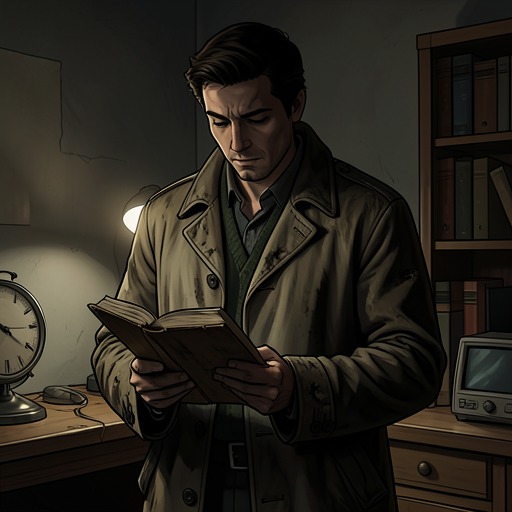
Daeshim and Nyia’s Separation
The Secret of SecretsDaeshim and Nyia’s Separation is the central rupture in Nyia Crosland and Daeshim’s love story, transforming an intimate college romance into an eight-year absence with consequences for two generations. What Daeshim calls a break is, from Nyia’s perspective, an unexplained abandonment: he leaves North Carolina Central University, cuts off every means of contact, and unknowingly leaves behind an unborn child. The separation therefore functions not merely as a romantic setback but as the decisive event that creates Nyia’s single motherhood, conceals Trey’s paternity, and forces both former lovers to live with a love neither has truly replaced.
Causes and Background
Nyia Crosland and Daeshim met at North Carolina Central University while both were pursuing demanding futures shaped by family responsibility. Nyia chose the historically Black university in her hometown so she could continue working and help Julius Crosland pay the bills while her mother underwent chemotherapy. She was entering the nursing program because her mother’s cervical cancer had shown her the value of compassionate medical care. Daeshim, two years ahead of her, studied forensic science, a field that grew from his fascination with crime programs and his strengths in chemistry and biology.
Their relationship developed quickly and intensely. Daeshim deliberately sought Nyia out in the nursing building, where he called her beautiful in Korean and made the word a private nickname. They filled their time with concerts, films, poetry slams, and quiet dinners at his apartment. Nyia regarded him as her first and most enduring love, while Daeshim later understood that every relationship after her had failed to reproduce the same connection. Their intimacy and discussions of marriage created an expectation of permanence, making his later withdrawal appear to Nyia both senseless and cruel.
The obstacle was Daeshim’s family. He described his parents as a traditional Korean family and repeatedly delayed introducing Nyia to them, saying they needed time to adjust to his relationship with a woman who did not fully understand their culture. Nyia responded by studying Korean culture online during the summer after they met. She did not pressure Daeshim; instead, she treated cultural learning as a way of preparing herself for a future meeting with his parents. Her willingness impressed him, but it did not overcome the family prohibition against the relationship.
Daeshim’s parents opposed Nyia after learning that she was Black and wanted to marry her. They threatened to end his tuition support unless he severed all ties with her. At the time, his scholarships and loans could not cover his education, and he depended on them financially. His inability to resist their demand became the moral source of his later shame. He loved his parents, but he recognized that their control over his education made his choice less an act of free romantic judgment than a surrender to economic dependence and traditionalist authority.
What Happens
Daeshim abruptly tells Nyia that they should take a break, then transfers schools without giving her a meaningful explanation. The break lasts eight years and counting. He changes all his telephone numbers and disappears from social media, leaving Nyia no practical route to reach him. Because she does not yet know that she is pregnant, she cannot tell him that he is going to become a father. Daeshim consequently spends the entire separation unaware that he has an eight-year-old son.
Nyia experiences the departure as devastation rather than a temporary pause. She spends what feels like days crying beneath her covers and searching through every part of their relationship for the mistake that might have caused him to leave. The abruptness of the rupture is crucial: she and Daeshim had been discussing marriage, so his language of taking a break cannot explain the scale of his disappearance. The absence of a goodbye leaves her with unanswered questions, while his silence turns a private family conflict into the organizing condition of her adult life.
During the separation, Nyia raises Trey alone and preserves Daeshim’s place in the child’s identity despite Daeshim’s absence. Trey has Daeshim’s mahogany-colored eyes and midnight-black hair, though the boy’s hair curls slightly at the ends. Nyia teaches Trey what she knows about his father and about Korean heritage. She also hires a tutor to teach both of them Korean, using extra money earned from additional shifts at Chantel Fifty. Her effort is deliberate: she refuses to let Daeshim’s disappearance erase the cultural and familial inheritance Trey has a right to know.
The separation also changes the meaning of ordinary objects and routines. When Nyia sees the small gnome Trey made, she is overwhelmed by tears because it makes her think of both her son’s unspoken longing for a father and her own continuing grief for Daeshim. Even after eight years, she misses him every day. Her work at Chantel Fifty helps sustain Trey and keeps the household functioning, while Chantel Daniels’s willingness to offer Nyia the assistant manager’s position and permit Trey to come to work when necessary forms part of the practical support network that carries Nyia through the absence.
Daeshim’s Experience of the Absence
Daeshim does not spend every day of the eight years openly pining for Nyia. He dates other women and maintains one relationship for two years, even considering a proposal. When the moment arrives to commit, however, he cannot do it. The relationship ends badly, and his lack of grief confirms to him that the woman is not Nyia and that marriage would have been a serious mistake. His subsequent singleness is less a declaration that he has remained romantically frozen than evidence that no later relationship has displaced the emotional standard established by Nyia.
His college experience remains divided between acceptance and regret. North Carolina Central University gives him community and strength as a Korean American, and he remembers the welcome there as one of the best experiences of his life. Yet it is also the setting he associates with leaving behind the greatest thing that happened to him. He repeatedly imagines the alternative in which he defied his parents, introduced Nyia to them, and protected their relationship. He understands that Nyia’s charisma might have won them over, but he also knows that this possibility does not excuse his failure to try.
Daeshim’s professional life develops in the aftermath. He becomes a forensic science technician in Charlotte, fulfilling the career direction he had begun at college, but professional success cannot resolve the moral injury of the separation. His best friend and lab partner, Ricky Graham, sees that he is in a funk and tries to draw him out for a drink. Daeshim knows that ordinary distraction cannot cure the problem: the person he needs is Nyia, and he does not know where she is. The casework and career he built therefore coexist with an unresolved private history.
Revelation and Accountability
When Daeshim and Nyia finally confront the separation, Nyia asks why he left school without telling her. Daeshim answers that he had been a stupid young man who did not know how to say no to his parents. He explains that they forbade him to see Nyia after learning that he wanted to marry a Black woman, threatened to stop paying his tuition, and continued supporting his education only on the condition that he cut all ties with her. He admits that he resisted at first but ultimately lacked the financial independence to sustain that resistance.
The explanation gives Nyia the truth she had been denied, but it does not erase the harm. Daeshim himself hears the weakness of his justification once he says it aloud and calls his behavior cowardly. Nyia’s immediate response is incredulity: the family pressure may explain the departure, but it cannot make the decision to disappear acceptable. The separation thus becomes a conflict between explanation and accountability. Daeshim’s dependence clarifies the circumstances; it does not absolve him of abandoning Nyia without a goodbye or allowing eight years to pass without finding a way back.
The revelation also changes the emotional direction of the story. Daeshim had long feared that Nyia hated him, and he believed she would have every reason to do so. Yet his confession creates the possibility of forgiveness because it replaces the apparent absence of feeling with an admission of fear, dependence, and continuing love. The reunion is not a restoration of the past exactly as it was; it is an attempt to build a relationship after both characters have lived through consequences Daeshim once tried to avoid.
Consequences and Aftermath
The greatest consequence of the separation is the delayed formation of Daeshim Kwon and Trey’s father-son relationship. Daeshim returns to Nyia’s life without having shared any of Trey’s first eight years, while Nyia has carried the work of parenting and cultural transmission alone. Their reconciliation therefore requires more than romantic forgiveness: it requires Daeshim to enter an existing family and accept the time he cannot recover.
Daeshim’s actions after the reunion show a new willingness to oppose the authority that once controlled him. He decides to send his parents photographs and video of the family and says that they need to see what their earlier stupidity caused him to miss. The gesture marks a reversal of the original separation. As a young man, Daeshim surrendered the relationship to preserve his parents’ financial support; as an adult, he openly presents Nyia and Trey to them and accepts the possibility of their disapproval.
His practical commitment follows his emotional declaration. With cases and transfer paperwork still to settle, Daeshim takes another month to move permanently from Charlotte to Durham and two weeks to relocate his belongings. He gives away or sells what he does not bring. The move makes the reconciliation material rather than merely verbal: he reorganizes his professional and domestic life around being present with Nyia and Trey.
The family consequences extend to both sides. Daeshim introduces Nyia to Ricky Graham and Tish, who welcome her and look forward to meeting Trey. Julius Crosland continues helping watch Trey when Nyia and Daeshim work, while Chantel Daniels remains willing to help when needed. The repaired family is therefore supported by a wider network of friends, coworkers, and relatives rather than isolated from the community that sustained Nyia during the separation.
Daeshim’s parents eventually visit to meet their grandson after receiving his text. During the call preceding the visit, they question him about Nyia’s pregnancy and whether Trey is truly his. Daeshim answers firmly that Trey is his. Nyia then speaks to the Kwon parents in Korean, assuring them that she has never spoken badly about Daeshim to Trey and that their son’s father and culture have always been part of the boy’s knowledge. Trey is subsequently given the phone and cautiously greets his grandparents in Korean. The scene does not erase the old conflict, but it establishes a new family boundary in which Daeshim claims responsibility, Nyia protects Trey’s inheritance, and the child meets the grandparents from whom the earlier prohibition separated him.
Narrative Significance
Daeshim and Nyia’s Separation combines the romance trope of lovers kept apart with a concrete critique of economic and familial power. The couple does not separate because love has faded or because Nyia refuses Daeshim’s culture. She actively studies that culture and seeks to meet his family on respectful terms. The decisive force is instead the Kwon family’s opposition to an interracial marriage, reinforced by Daeshim’s financial dependence and youthful inability to stand against it.
The eight-year interval gives the separation a generational scale. Nyia loses a partner and becomes a single mother; Daeshim loses the early life of a son; Trey grows up knowing a father only through his mother’s memories. At the same time, Nyia turns absence into preservation by teaching Trey Korean and keeping Daeshim’s history alive. The eventual reunion consequently asks whether love can survive not only distance but also the unequal distribution of responsibility created by abandonment.
The action’s resolution depends on changed behavior rather than nostalgia alone. Daeshim acknowledges that he caused the rupture, moves back to Durham, claims Trey publicly, and challenges the parents whose demands once governed his life. Nyia’s forgiveness permits family rebuilding, but the narrative retains the cost of what happened: eight years cannot be returned, and Daeshim must become present in a family that Nyia built without him. The separation is therefore both the wound that drives the story and the test that determines whether their second chance can become a durable family life.